
Washington Criminal History Records
Washington criminal history records are maintained by the Washington State Patrol and available through multiple official channels. You can search conviction records online using the WATCH system, look up court cases through the statewide Odyssey Portal, or find currently incarcerated individuals through the Department of Corrections. This guide covers every major way to search criminal history in Washington, who maintains each database, what information each source holds, and what it costs to get a record.
Washington Criminal History Quick Facts
What Washington Criminal History Records Contain
Criminal history records in Washington document arrests, charges, court dispositions, and sentencing for individuals processed through the state's criminal justice system. The Washington State Patrol Identification and Criminal History Section serves as the central repository for all statewide criminal history record information (CHRI). Every law enforcement agency and court in Washington submits arrest and disposition data to this repository. Records are linked through the Washington State Identification System (WASIS) and the WSP Automated Biometric Identification System (ABIS), which means records are tied to fingerprints rather than names alone.
Washington law divides criminal history data into two categories. Conviction data refers to records of cases that resulted in a guilty verdict, plea, or other disposition adverse to the subject. Under RCW 10.97.050, conviction records may be disseminated to the public without restriction. Non-conviction data covers arrests that did not lead to a conviction and proceedings no longer active. That data is more restricted. It can be viewed but generally cannot be copied or shared with the public under RCW 10.97.080.
A full criminal history record may include case numbers, statute citations, conviction dates, sentencing details, and any registered sex offender status. Records tied to juvenile adjudications are kept separate under RCW 13.50 and are not part of the public criminal history system. Sealed records, vacated convictions, and expunged data are also removed from public access.
The Washington State Patrol Criminal History Records page outlines the full scope of records maintained, including court orders for vacates, deletions, seals, and firearm rights restorations. The WSP section also handles the Compromised Identity Claim program for victims of identity theft whose records have been misused.
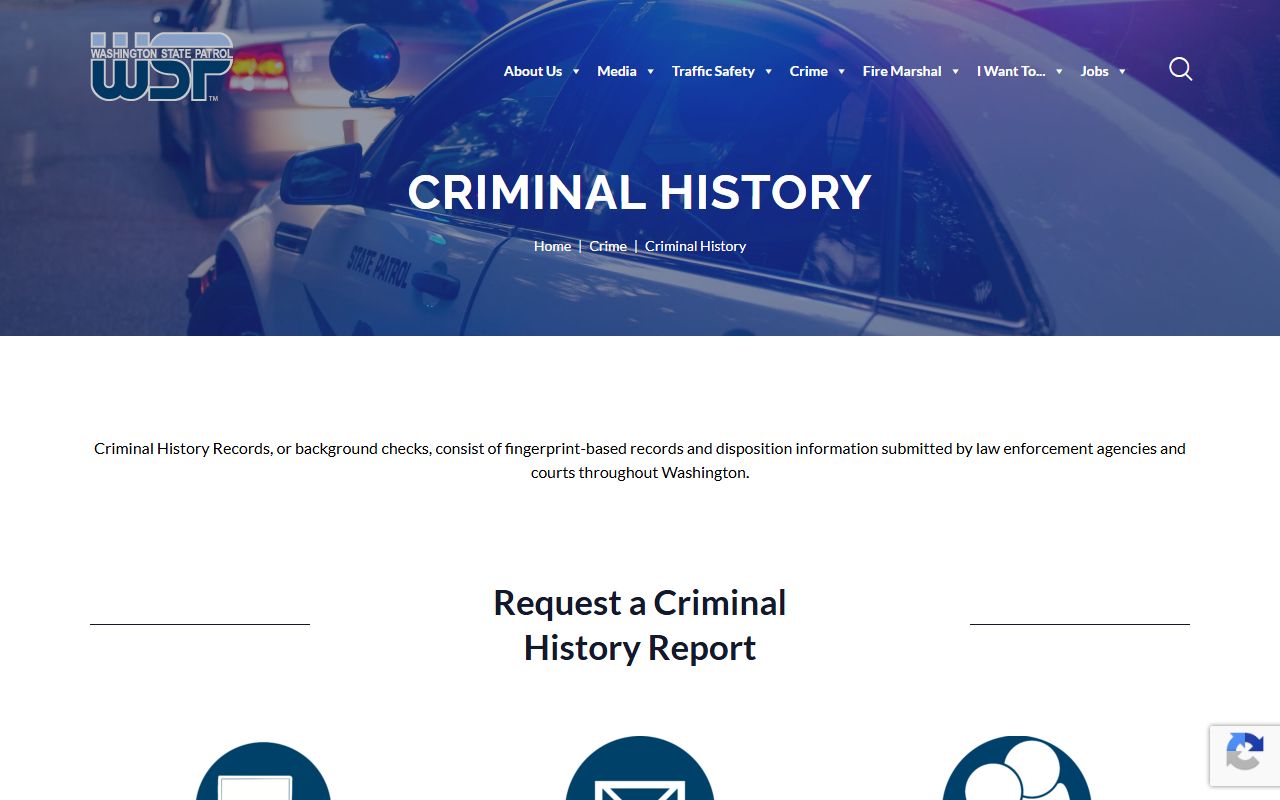
The WSP Identification and Criminal History Section processes all official record requests and updates, including court-ordered modifications to existing records.
How to Search Washington Criminal History
Washington offers three main ways to request a conviction record check from the state: online through WATCH, by mail, or in person at the Olympia office. Each method returns the same underlying data but differs in speed, cost, and the level of identification required. Online is the fastest and cheapest option for name-based searches. Mail is the standard fallback when online access is not available. Fingerprint-based requests, whether by mail or in person, give the most reliable results because they confirm identity biometrically.
The in-person office is at the Helen Sommers Building, 106 11th Ave. SW, Suite 1300, Olympia, WA 98501. Hours are Monday through Friday, 8:00 a.m. to 5:00 p.m., with a closure from noon to 1:00 p.m. The office is closed on legal holidays. You need valid government-issued photo ID to be served. If you want to review your own complete record, including non-conviction data, that review is free but capped at thirty minutes.
Mail requests go to Washington State Patrol, Identification and Background Check Section, PO Box 42633, Olympia, WA 98504-2633. The Request for Conviction Criminal History Form is available as a PDF on the WSP website. Mail processing typically takes 7 to 10 business days depending on volume. You can pay by check, money order, or Bankcard Authorization form.
Note: Non-conviction data older than one year does not appear in public WATCH results, but it is part of your personal record and can be reviewed in person at no cost.
WATCH System for Washington Criminal Records
WATCH stands for Washington Access to Criminal History. It is the official online portal at watch.wsp.wa.gov for searching conviction records maintained by the Washington State Patrol. Results come back right away after you enter the subject's name and date of birth. The system costs $11.00 per search, paid by Visa, MasterCard, or American Express. Organizations can apply for billed or non-profit accounts.
What WATCH shows: all known aliases, conviction information with statute citations, case numbers, sentencing data, arrests less than one year old with pending dispositions, and sex offender or kidnapping offender registration status. What it does not show: non-conviction data older than one year, sealed records, expunged records, juvenile adjudications handled outside adult court, and records from other states unless they were submitted through fingerprint channels.
The key difference between WATCH and a name-only search is that WATCH results are fingerprint-linked through WASIS. This means even if a person used a different name at arrest, the record still attaches. You can also get a notarized verification letter for $10.00 extra. If you need to confirm a result, place the subject's right thumbprint on the printed report and mail it to WSP at no extra fee for comparison.
Mail requests for name-based checks cost $32.00. Fingerprint-based mail checks run $58.00 and require a completed FD-258 fingerprint card. Fingerprinting at the Olympia office adds $16.00. If you need a non-conviction copy by mail, send a fingerprint card and $12.00 to the same PO Box address.
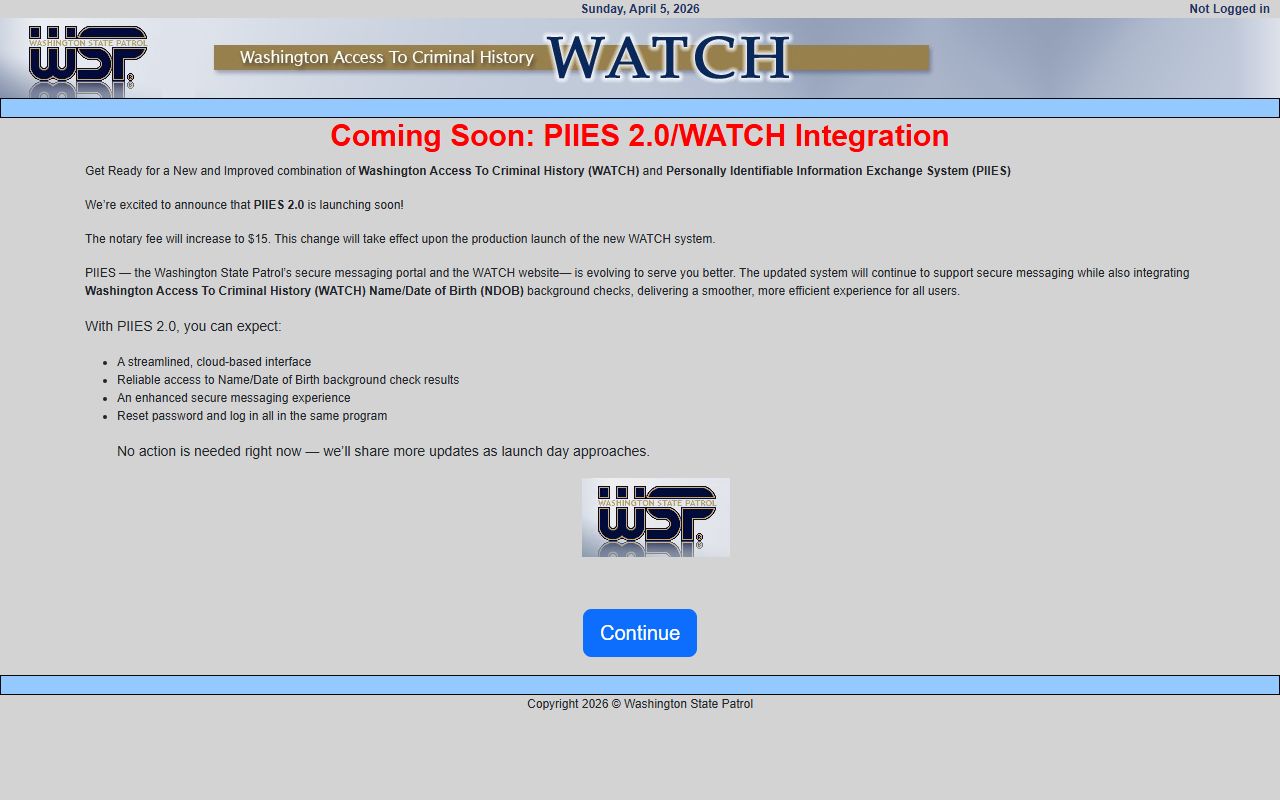
The WATCH portal gives you immediate access to Washington conviction records, with account options for both one-time users and organizations that run frequent searches.
Washington Courts Criminal Record Search
The Washington Courts Odyssey Portal is the statewide case management search tool that covers Superior Courts, District Courts, and Municipal Courts across most of Washington. It is free to use. You can search by party name, business name, or case number and filter by court location, case type, and filing date. Results show case summaries, party names, charges, hearing schedules, and disposition dates. You do not get document copies from the portal; those must be ordered from the clerk at the court where the case was filed.
The Washington Courts Name and Case Search page explains which courts participate and how to use the system. One major exception: King County Superior Court does not use the Odyssey Portal. King County runs its own separate system called LINX (and KC-Script). If you need a King County Superior Court case, you must search through the county's own portal instead.
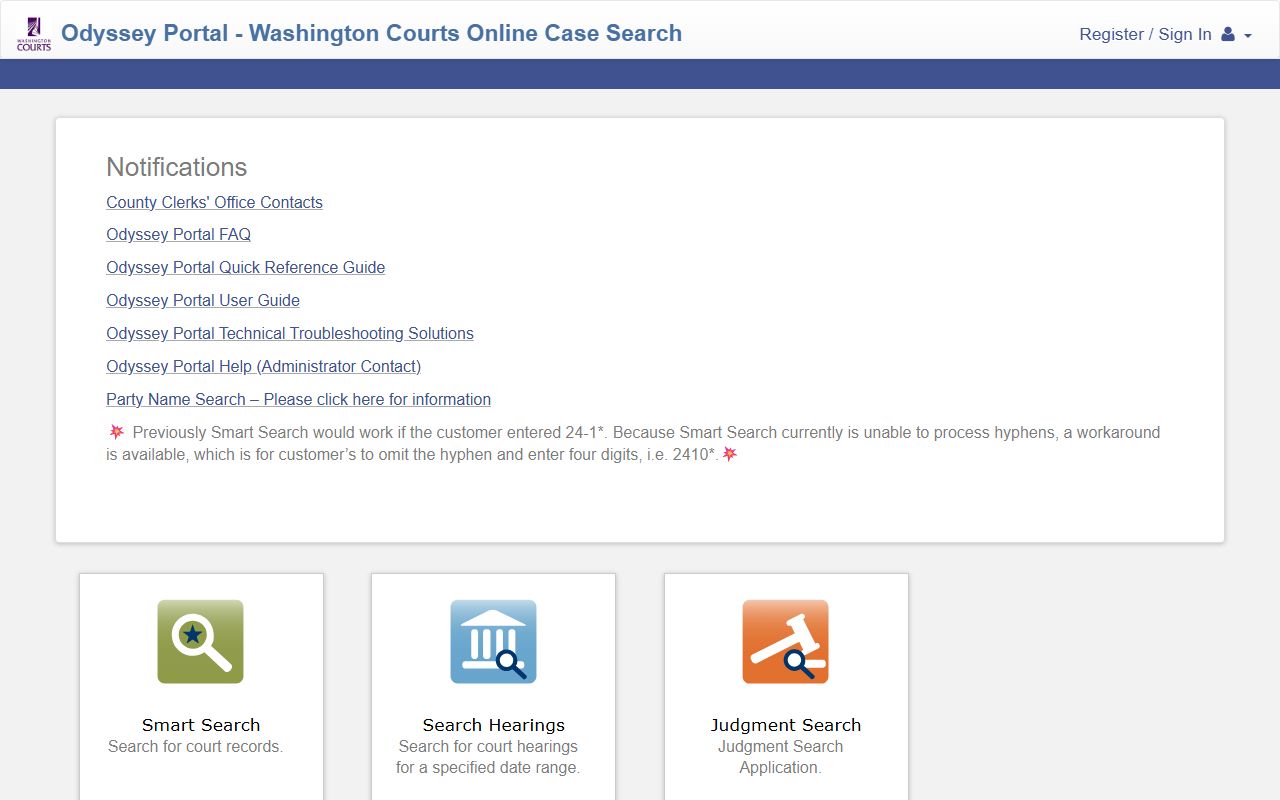
Clicking a case number in the Odyssey Portal opens a full detail view showing all parties, attorneys, scheduled hearings, docket entries, and linked related cases.
Copy fees at the clerk's office typically range from $0.25 to $0.50 per page for standard copies and $5.00 for certified copies. Confidential cases, including most juvenile matters, adoptions, mental health commitments, and sealed records, do not appear in the public portal at all. For historic court records no longer held by the court, try the Washington State Digital Archives, which has Superior Court records from counties across the state going back to the 19th century.
DOC Inmate Search and Criminal History
The Washington Department of Corrections runs an Incarcerated Search tool that lets you look up individuals currently or previously held in state custody. The database covers releases back to 1982. You can search by DOC number, last name, or first name. Partial name searches are supported and the percent sign works as a wildcard for spelling variations.
Basic search results show each person's DOC number, full name, age, current facility, and status. Click through to a full profile for date of birth, race, height, weight, county of commitment, offense details, release date estimates, and supervision level. Facility names link to visiting hours, mailing addresses, and contact information for that institution. The DOC updates records within 24 to 48 hours of transfers or releases, though real-time same-day accuracy is the goal.
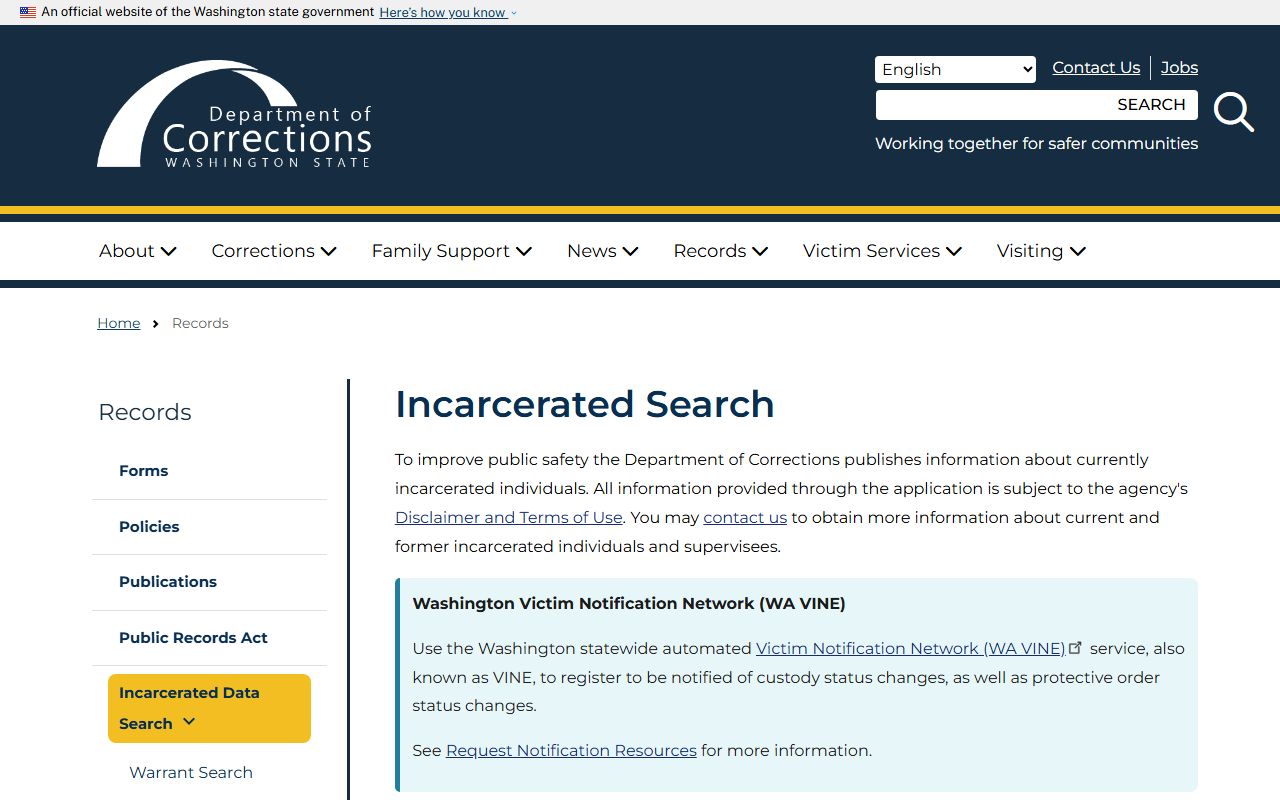
If someone you are looking for is not in the DOC system, check whether they may be held in federal custody through the Federal Bureau of Prisons or in ICE detention through the U.S. Immigration and Customs Enforcement locator.
For custody status notifications, victims and others can register for VINE (Victim Information and Notification Everyday), which sends alerts when an offender's status changes. If you have a tip about a wanted individual or someone evading supervision, contact the DOC tips line at (866) 359-1939 or use the DOC Tips and Leads form online. Do not approach the individual directly.
Sex Offender Registry in Washington
Washington maintains a public sex offender registry at wasor.org, operated by the Washington Association of Sheriffs and Police Chiefs (WASPC). You can search by name, by address proximity on an interactive map, by city or county, or by non-compliant status. Map searches let you set a radius from any address, from a quarter mile to five miles, and view registered offenders as pins you can click for profile summaries.
Each offender profile on the registry shows the person's name, known aliases, photograph, physical description, residential address (for most risk levels), employment address if applicable, vehicle information if applicable, offense history, and risk level. Washington uses three levels: Level I offenders have low disclosure; Level II notifications go to schools, daycares, and organizations serving children; Level III offenders have community-wide public notification, which can include flyers distributed in the area. You can sign up for email alerts on WASPC's sex offender page to get notified when a registered offender moves within a set distance of your address.
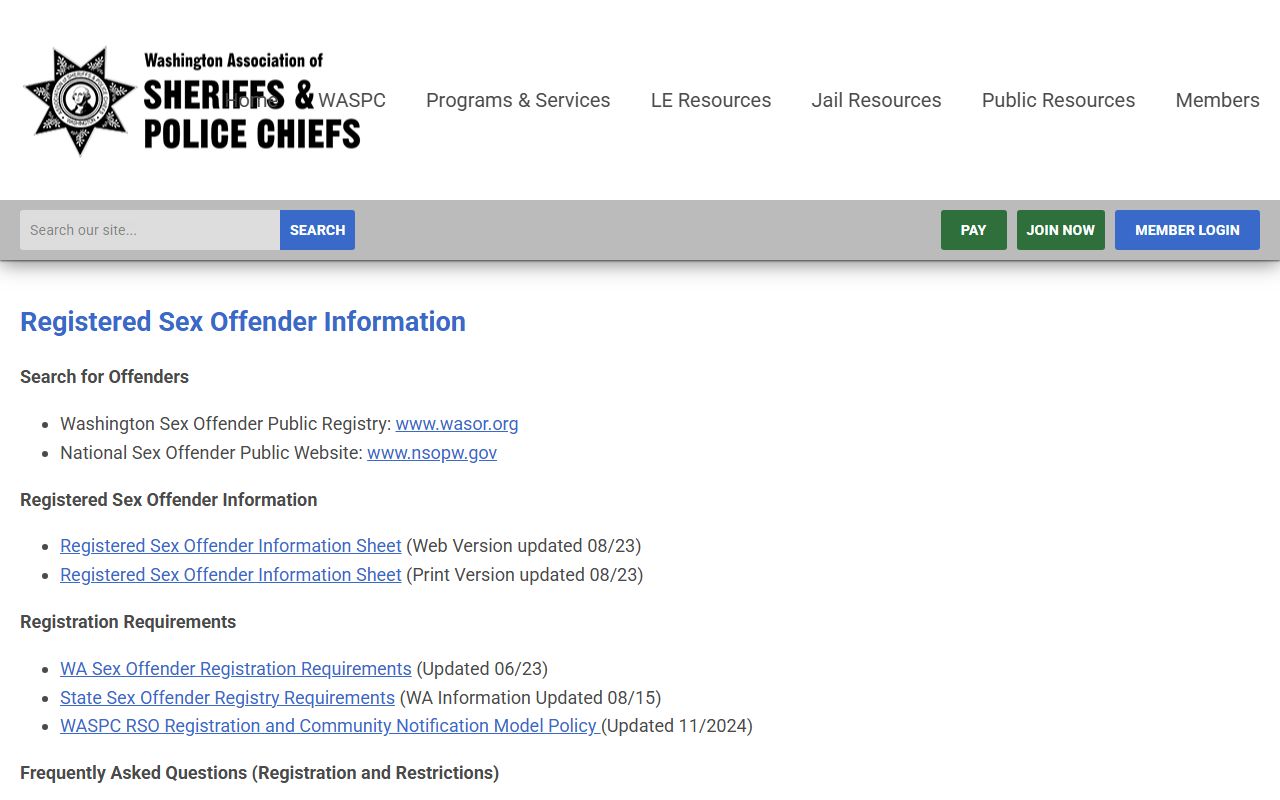
The registry also tracks non-compliant offenders who have failed to verify their registration on schedule, a separate searchable category useful for law enforcement and public safety purposes.
Registration in Washington is governed by RCW 9A.44.130 and related statutes. As of July 23, 2023, adults convicted of Class A sex offenses must register for life. Class B offenses carry a 15-year registration period and Class C offenses carry 10 years. Juveniles have separate requirements depending on age at time of offense and the specific charge. Offenders register in person at the Sheriff's Office in the county where they live.
Note: For multi-state searches covering offenders from across the country, the National Sex Offender Public Website at nsopw.gov lets you search all participating state registries at once.
Washington Public Records Law and Criminal History
Access to criminal history records in Washington is governed by two overlapping legal frameworks. The first is the Public Records Act (PRA), Chapter 42.56 RCW, which requires state and local agencies to make public records available to all persons without requiring a reason. The second is the Criminal Records Privacy Act, Chapter 10.97 RCW, which sets specific rules for how criminal history record information may be collected, maintained, and shared.
Under these laws, conviction data is fully public. Anyone can request it, copy it, and use it without restriction. Non-conviction data is different. Under RCW 10.97.080, non-conviction records cannot be copied or disseminated to the general public. They may be viewed in person, but agencies must redact non-conviction information from any copies they produce. This rule came into sharper focus after the 2011 decision in Bainbridge Island Police Guild v. City of Puyallup. The MRSC guide on criminal history disclosure gives a plain-language breakdown of these rules for both agencies and requestors.
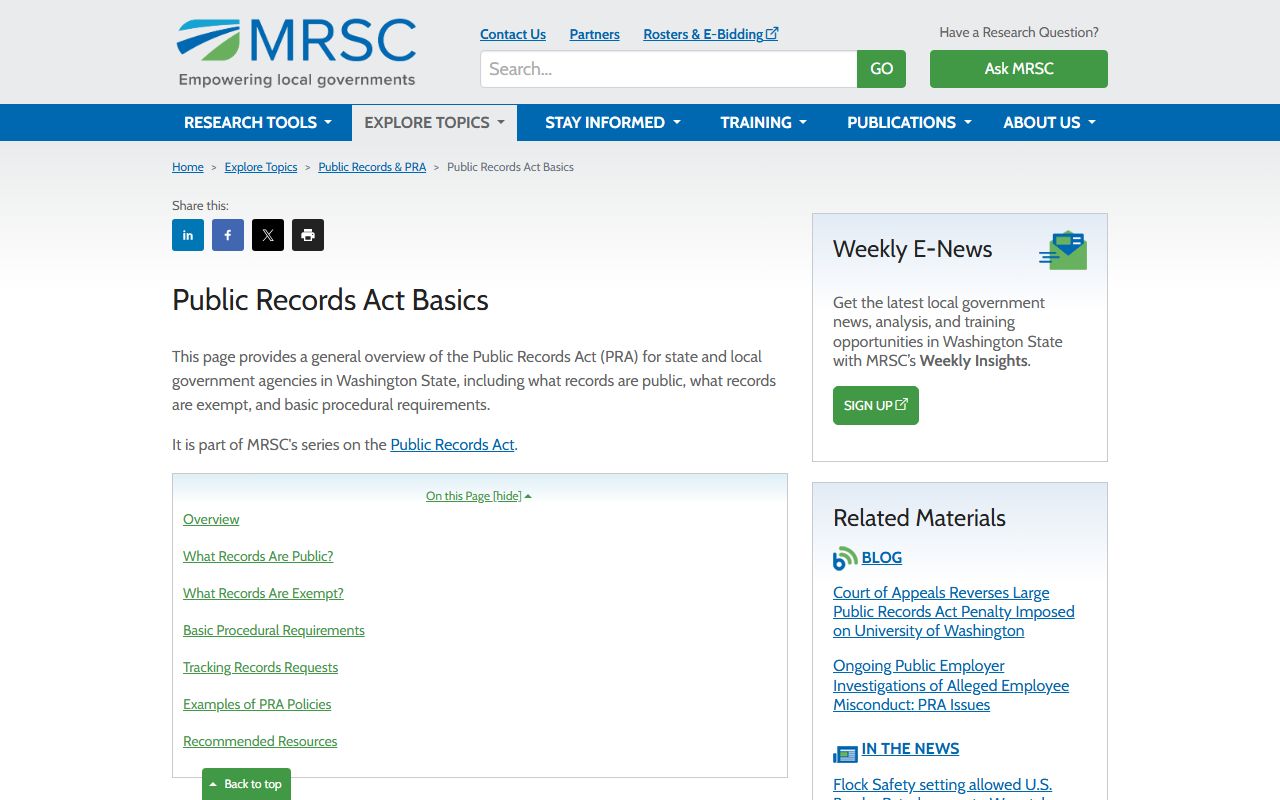
Washington agencies must respond to public records requests within five business days under RCW 42.56.520, either providing the record, giving an estimate, or issuing a denial with a statutory citation.
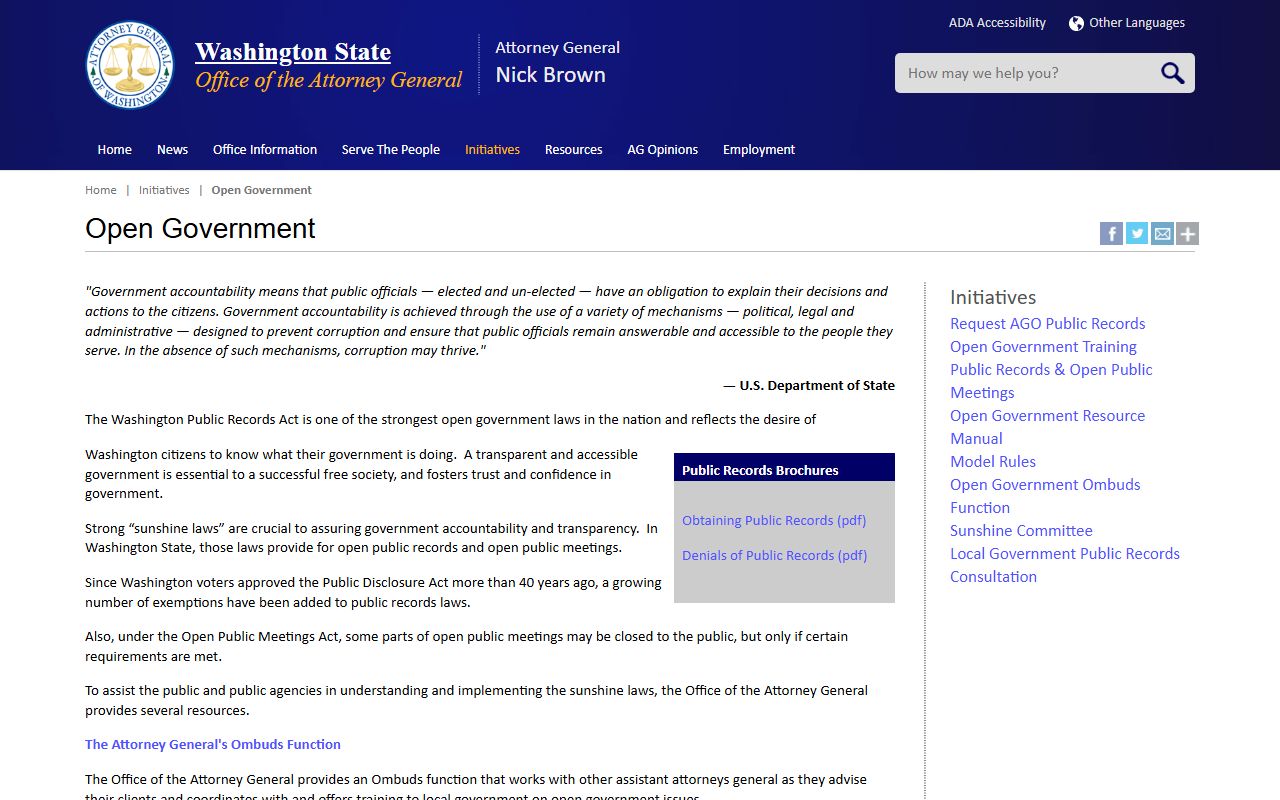
The Attorney General's Open Government Resource Manual is the primary reference for understanding the PRA in full. There is no residency requirement to make a request. Agencies cannot ask why you want a record. They also cannot charge for the time spent locating records or supervising inspection; fees cover copying costs only under RCW 42.56.120. If a request is denied, you can appeal to the Superior Court in the county where the record is held. The agency bears the burden of proving the exemption applies.
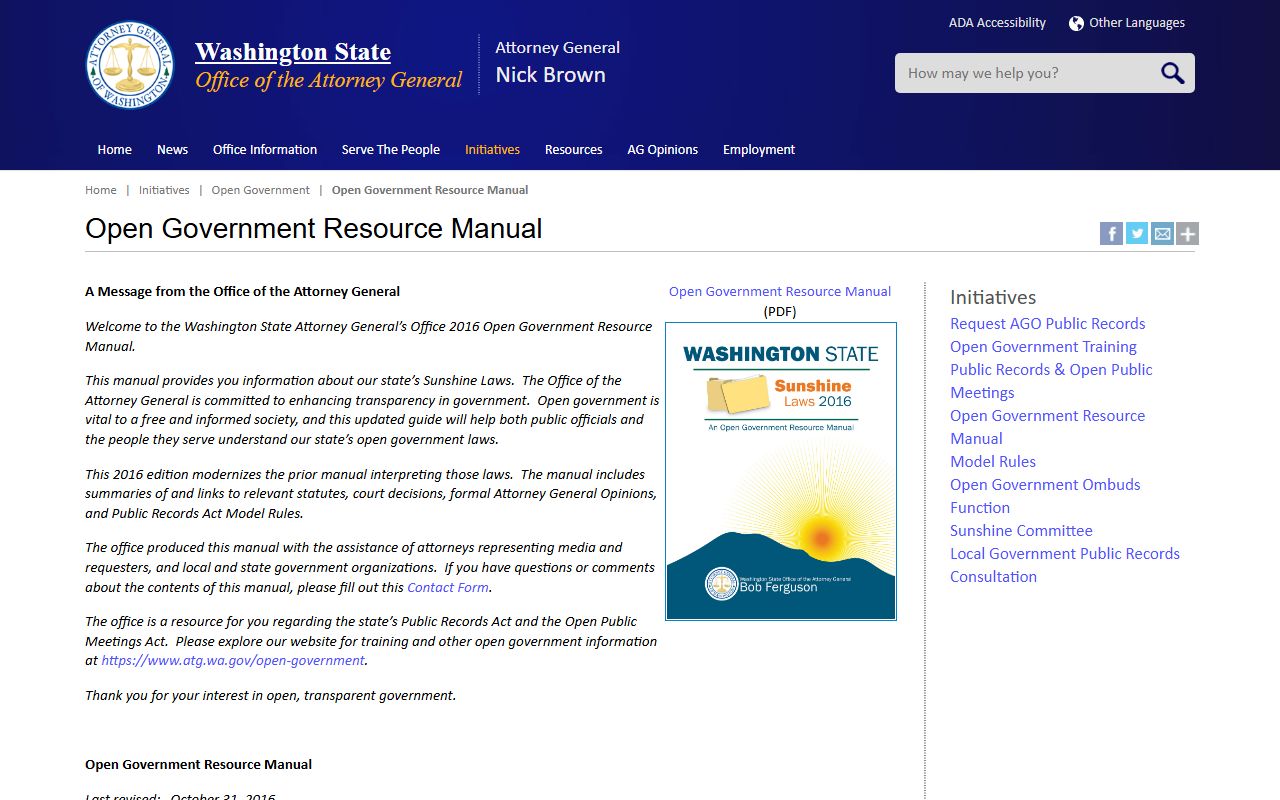
The Attorney General's office also provides training and technical assistance to agencies and can issue guidance on specific open government questions, though it does not directly enforce the PRA against local agencies.
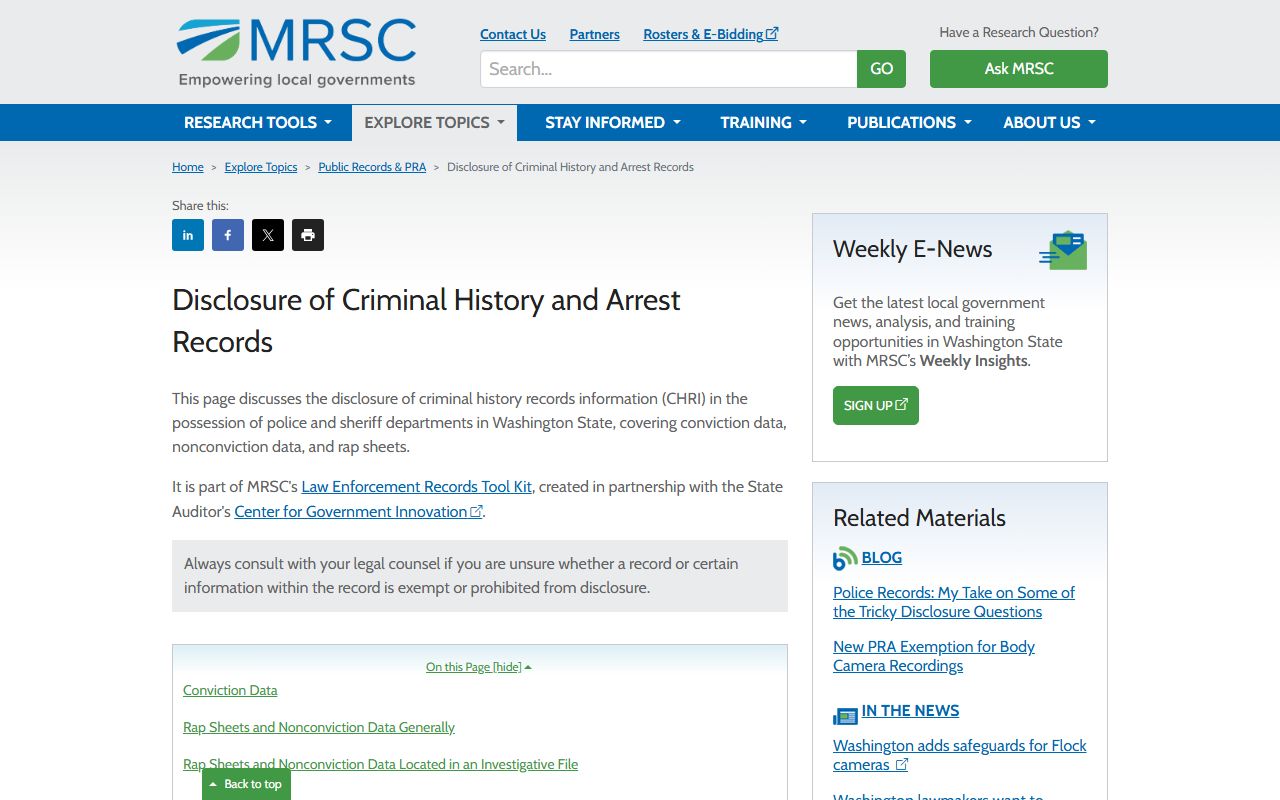
MRSC advises agencies to consult legal counsel when dealing with records that may contain a mix of conviction and non-conviction data, given the requirement to redact before production.
RCW 10.97 Criminal Records Privacy Act
The Criminal Records Privacy Act at Chapter 10.97 RCW is the core statute controlling how criminal history record information flows through Washington's criminal justice system. It defines the key terms, sets access rules, and creates civil liability for negligent disclosure. Here is what each major section covers.
RCW 10.97.030 defines conviction record and non-conviction data. RCW 10.97.050 removes all restrictions on disseminating conviction data. RCW 10.97.060 allows subjects to petition for deletion of non-conviction records once they meet certain conditions, including no prior convictions, no pending proceedings, and specified waiting periods. RCW 10.97.080 restricts non-conviction data to criminal justice agencies, the subject of the record, and those specifically authorized. RCW 10.97.090 creates civil liability for damages when agencies negligently share criminal history data in violation of the chapter.
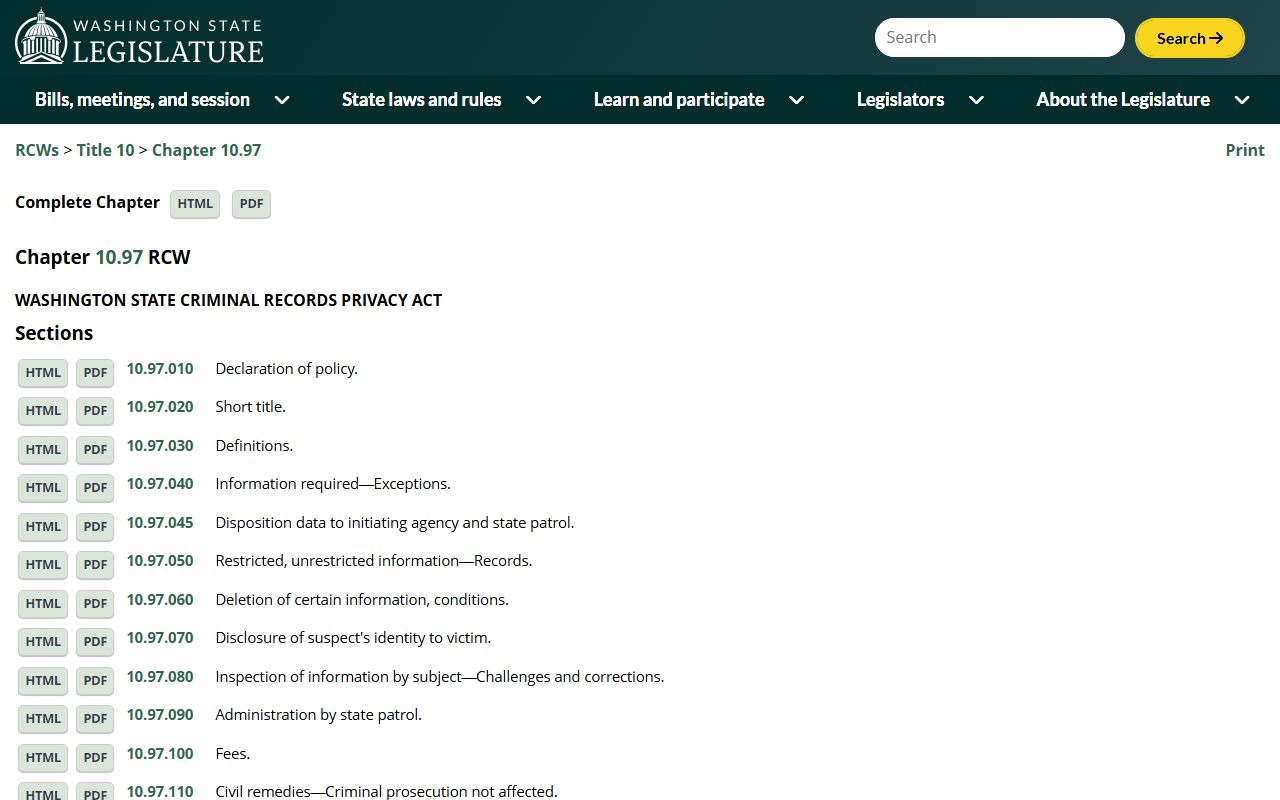
The full text of Chapter 10.97 RCW is available on the Washington State Legislature website and is regularly updated to reflect legislative changes to criminal history access rules.
Washington Court General Rule 31 governs court records access specifically, separate from the PRA. It sets rules for how courts handle requests for case files, fee schedules, and what categories of court records may be withheld. General Rule 31.1 covers administrative records held by the courts. Both rules apply to criminal case files and are worth knowing if you plan to request records directly from a court clerk.
Washington State Digital Archives
The Washington State Digital Archives is an online repository holding over 100 million records from city, county, and state agencies across Washington. For criminal history research, the archives are most useful for older records that have been transferred out of the courts. This includes Superior Court case files, judgment rolls, and criminal proceedings from the 19th and 20th centuries that have been digitized and made searchable by name, case number, date range, record type, or originating agency.
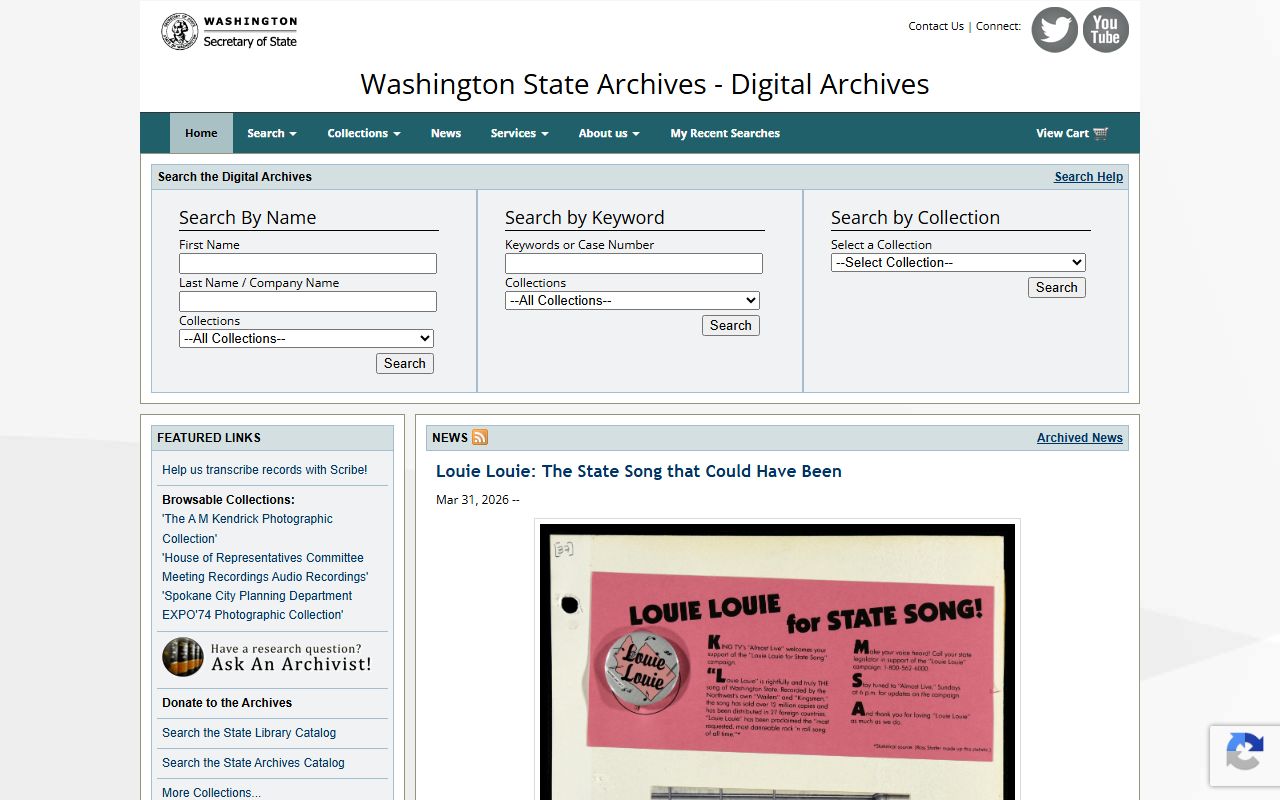
The archives maintain four regional branches: Northwest in Bellingham, Puget Sound in Olympia, Central in Ellensburg, and Eastern in Cheney. Each branch holds records from its geographic area, and staff can assist with research requests that require more than basic searching.
One notable collection in the archives is the Vancouver Police Department Photographs of Criminals from 1896 to 1940. This contains booking photos and arrest information from that era. Certified copies of archived records can be ordered online or through the appropriate regional branch; fees vary by document type. For genealogical work or historical research involving prison registers and territorial court proceedings, the Digital Archives is often the only place to find these materials.
Challenging or Modifying Your Criminal History Record
If you believe your Washington criminal history record contains an error, you can request a modification through the WSP. Submit a Request for Modification of Record Form to the Criminal History Records Section. If your challenge is substantiated, the section will correct the record. You can obtain this form on the WSP website or by contacting the Identification and Background Check Section directly by phone at (360) 534-2000.
Individuals who have been victims of identity theft may apply for the Compromised Identity Claim (CIC) program. A successful CIC application results in a letter with your state identification number, a wallet card showing your name, SID, photo, and thumbprint, and a notation on background checks flagging the compromised identity. This prevents someone else's criminal record from appearing when your name is searched. To start the process, complete the Compromised Identity Claim form available on the WSP site.
Court-ordered relief from criminal records, including vacates, seals, dismissals, and certificates of discharge, is processed by the WSP section after the issuing court sends the order. The section can distribute these updates by fax, email, or regular mail.
If you want to review your own full record, including non-conviction data, you can do so in person at the Olympia office at no fee. Bring a fingerprint card for identification. The review is limited to thirty minutes. Alternatively, you can request a copy of your non-conviction data by mail by sending a fingerprint card and $12.00 to the WSP mailing address in Olympia.
Name-Based Case Search Through Washington Courts
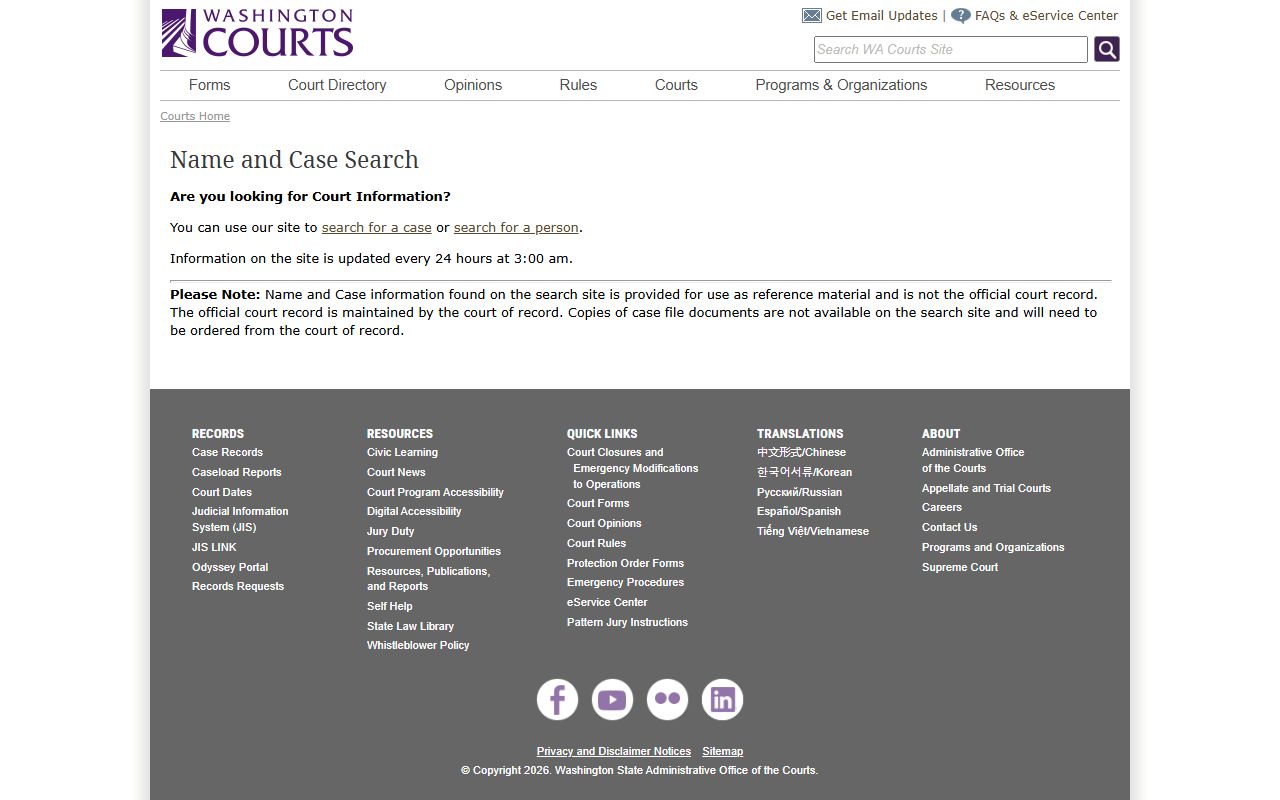
Beyond the Odyssey Portal, the Washington State Courts Name and Case Search page serves as the central hub for all court lookup tools the state provides. It links out to the Odyssey Portal for most courts, to King County's separate LINX system, and to other court-specific resources. This is the right starting point if you are unsure which portal to use for a particular county.
Search results in Odyssey show case number, case title, case type, filing date, court name, case status, and party role. Clicking into a case shows all parties, attorneys, scheduled and past hearings, and docket entries with dates. Documents are not available online for most users; you must contact the clerk's office. The portal supports partial name searches and wildcard characters to help find records under variations of a name.
Browse Washington Criminal History by County
Each of Washington's 39 counties has a Superior Court and at least one District Court that handle criminal cases. Select a county below to find court contact information, local criminal records access, and county-specific search tools.
View All 39 Washington Counties
Criminal History in Major Washington Cities
Washington's largest cities have their own police departments and municipal courts that generate and maintain criminal records alongside county-level court filings. Select a city to find local record sources.